BLACK GIRL MOVIE REVIEW COLLEGE EDITION
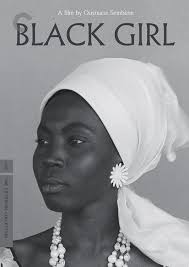
The film Black Girl (1965), written and directed by Ousmane Sembène, focuses on a young woman from Senegal named Diouana adjusting to life in the French Rivera. In this mostly narrated film, it expresses the thoughts and feelings of Diouana and her pursuit of a better life. The bleakness of the film not only expressed by the acting of the film but by the opposites of setting that is shown through the being shot in both Senegal and the French Rivera. This film is not for that audience that use movies to escape reality for the sake of recreation and entertainment. This is an artistic film in which cultural appropriation is addressed and the effects of post-colonialism.
Black Girl begins with the protagonist Diouana arriving at the French Rivera dressed to impress in a sophisticated dress and heels. She stands out not only by the fact she is the only person from Africa in the vicinity but by the pride she feels in being in France. She is picked up by her one of her French employers, and when she arrives, she is immediately put to work as a maid. This causes a lot of confusion and resentment for Diouana because in Senegal she was hired by the same employers to be a governess. This was not the case because the children were not present for most of the time that she is working in the home of her employers. A discontentment of her living and working situation that very closely resembles domestic slavery is mistaken for laziness and creates friction between the employers and Diouana. A tragic end was inevitable in this very bleak and dark film.
In this hour-long depiction of life, the audience is shown Diouana sifting through her life. The film tells through a series of flashbacks and a narration style that alludes that Diouana is talking to the audience. I found this narration style an interesting way of progressing the story. There is very little dialogue that is said between the employers and Diouana. There is no form of resistance to how the employers treat Diouana until the very end of the film. The employers portray different characteristics in the different environments that they were put in. They collect artifacts from the country that they are visiting and appropriate the culture by hanging up said artifacts at decoration. The only difference is that when the employers finally return home to the French Rivera they not only have “authentic” African memorabilia but also a worker from Senegal. One of the artifacts that creates a lot of symbolism is the mask that Diouana gifts to her employers as a gesture of appreciation for the job. In doing so, however, they display it on their wall without any sort of reverence and treat it as just another souvenir.
They mistreated Diouana in the French Rivera. In Senegal, the employers gave her a vision and hope of life that is better than the life that she was in the freshly made independent area of Senegal. Unfortunately, even with the country’s independence from France, they are still looked down upon based on the color of there skin. An attitude of entitlement is clearly expressed by the employers in the film. It was expressed in one scene where Diouana is tasked to make a nice dinner for her employers and their guests. She does as she is told, and the employers tell their guest that they are eating a traditional African dish. Status and to show how cultural these employers have they feel they need to flaunt that they have an exotic employee named Diouana from a far-off land. She was treated as one of the souvenirs because she was shown off for the company and used by the employers for things that it probably was not originally be intended for.
This movie which was made in 1966 and one of the first films that come from African cinema. The movie was shot in black and white. This was a stylistic choice that the director wanted to portray in this film. This gives a greater contrast of visuals because She is given tasks of washing and cleaning that are shown in montage format to express the mundaneness of her tasks that she was forced to do. The scenes filmed in the French Rivera are very boring with very little action taking place. There is just a steady cam on Diouana recording her sleep, eat, and do chores. The contrast of the camera work when scenes were shot in Senegal. The scenes in Senegal was livelier and more expressed Diouana more with personality and with vigor. The camera work seemed to be more handheld and shaky because the camera followed Diouana from place to place.
The film was not my favorite of the films I was suggested to watch. To tell the truth I felt bored when I was watching the movie. I was upset that the character Diouana just accepted that this was a life she deserved. I felt that she should have left her situation and logically it did not make any sense to me what her alternative to quitting the job. I was caught off guard by the abrupt climax of the movie. The film did not really create a sensation of fulfillment that I am accustomed to receiving when I go to watch a movie. The ambiguity of what happens to the characters after what seems to be the conclusion made me feel rather depressed and feel like there is no justice in the world. The audience for this film needs to know that this movie progresses at a very slow pace with very little action. The conflicts are mainly internal and not addressed by the external. The language barrier between cultures is addressed. To put in plain terms, watch this movie with an open mind and if you wish to educate yourself on issues that do not usually receive a platform. I did not hate this movie, and I think it is worth watching whether you are a media buff or not. I give this film a three out of five stars.

 Marco's Movies MVC 201